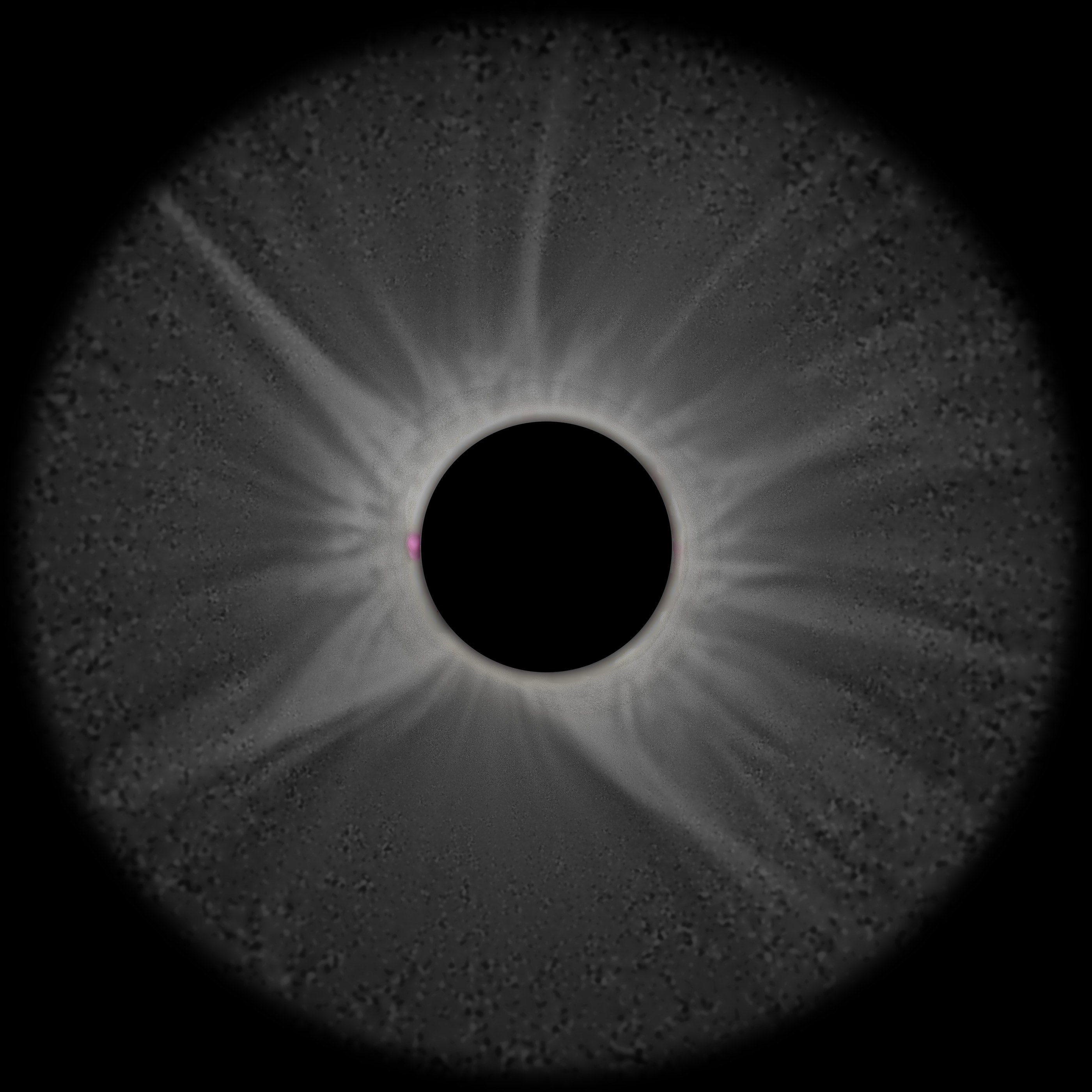
The solar corona during totality, 12 August 2026
Total solar eclipse · 12 August 2026

Eclipse at Sunset

The Sun went dark over Asturias as it sank into the west

On the evening of 12 August 2026 the Moon’s shadow swept across northern Spain with the Sun already low in the west. Near Oviedo the first bite came at 19:31:12. At 20:26:54 the Sun went out, ten degrees above the horizon, and for a minute and fifty-two seconds the long summer evening collapsed into a false night. Then the light returned, the Sun sank reddening into the haze, and the last of the Moon slid clear at 21:20:55, six minutes before sunset.

Totality1 min 52 s
Sun’s altitude10.3°
Second contact20:26:54
Third contact20:28:46

The eclipse in sequence

First contact to last sliver, a frame every seven minutes or so, with the diamond rings, the beads and totality at the hinge. As the Sun sinks it reddens, from white through amber to the deep red of light dragged through a long slant of hazy air. None of that colour was added.

19:31
19:37
19:44
19:52
19:59
20:05
20:12
20:20
Diamond ring, 20:26:50
Baily’s beads, 20:26:52
Chromosphere, 20:26:56
Prominence, 20:27:05
Totality, HDR
Totality, annotated
Prominences, stacked
Diamond ring, 20:29:03
20:35
20:42
20:48
20:54
21:00
21:08
21:13
21:20
Into the haze, 21:16
Last contact, 21:20

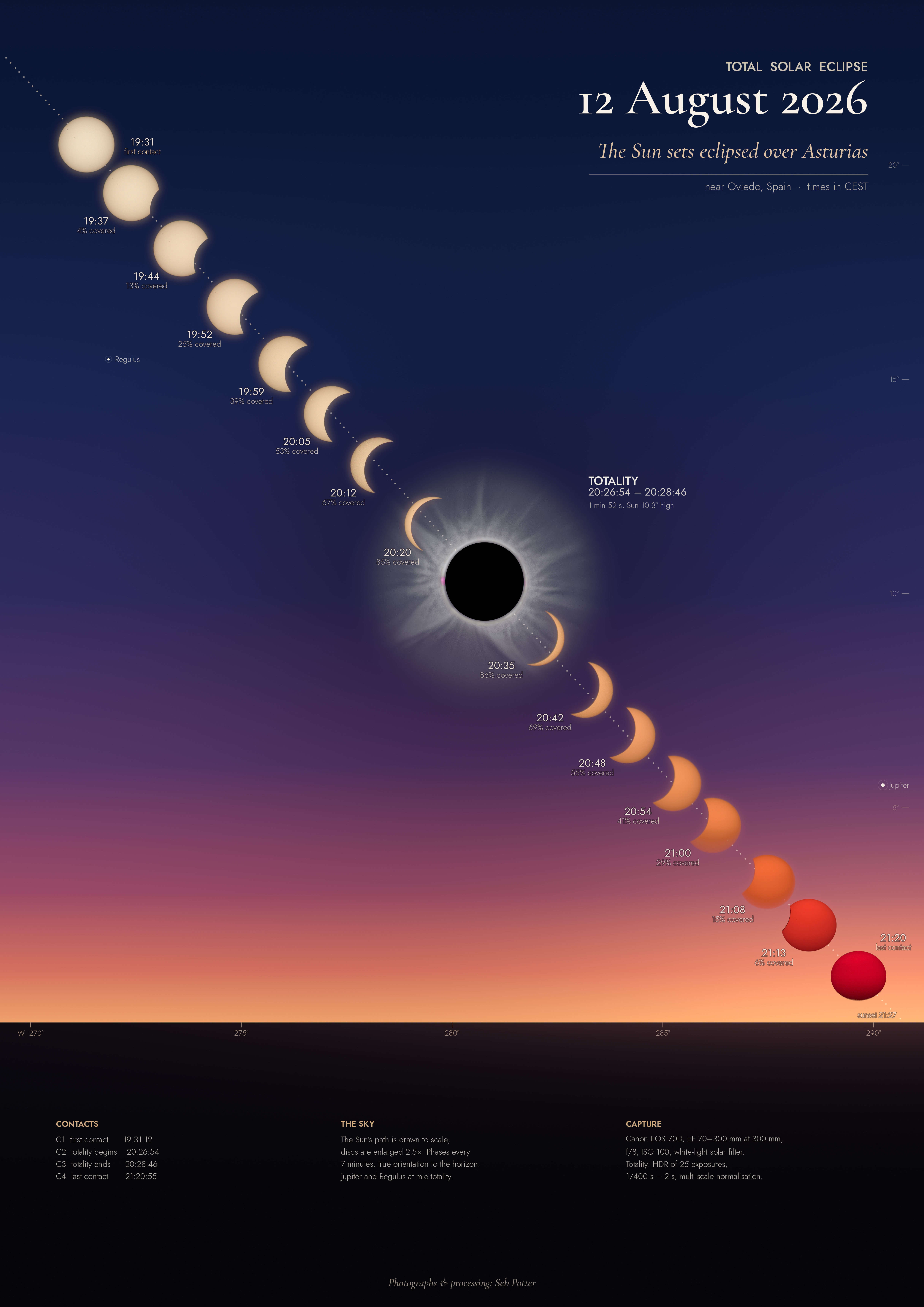
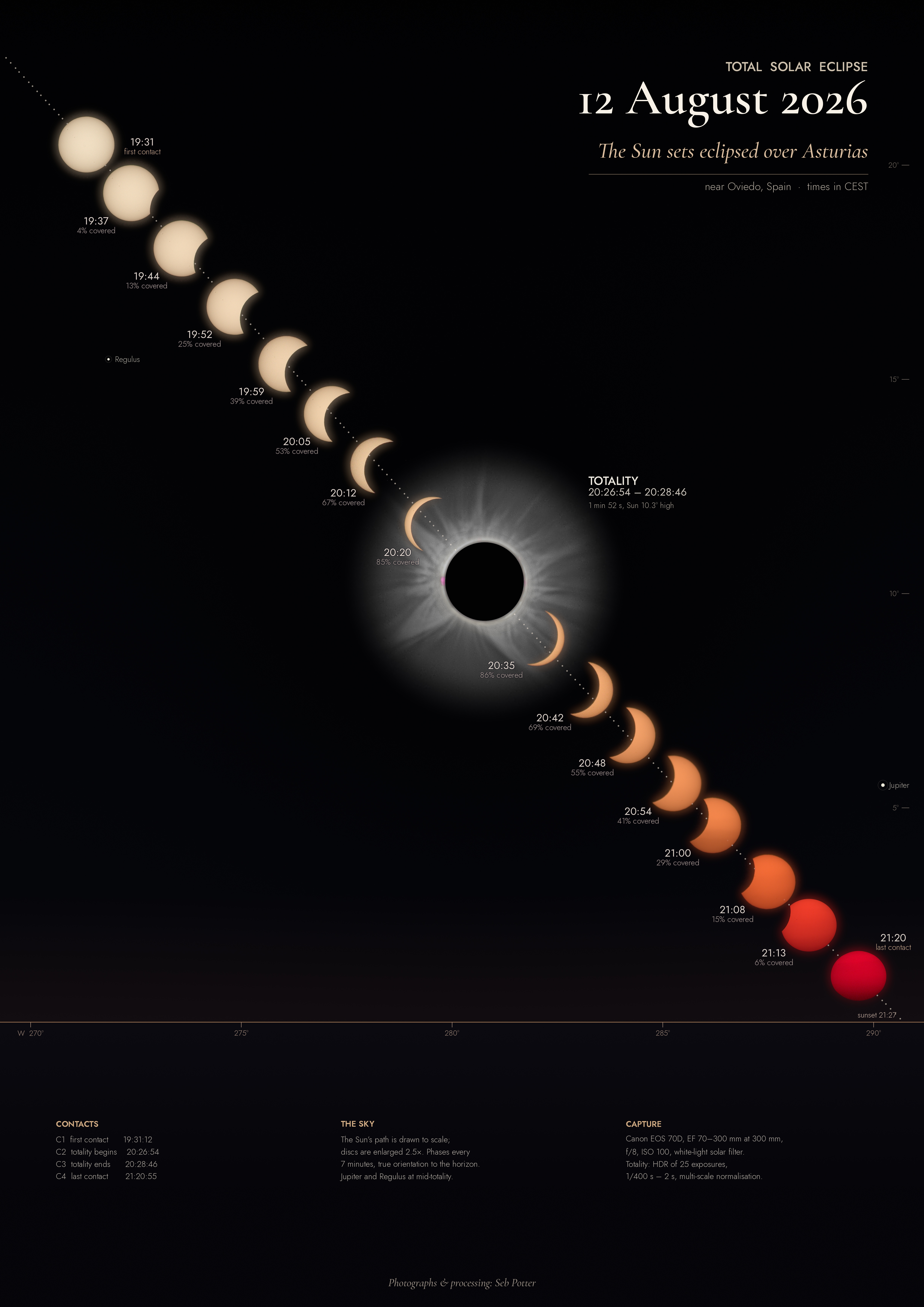
The poster

The Sun’s real path down the western sky that evening, drawn to scale for this corner of Asturias, with sixteen phases roughly seven minutes apart and totality at its heart. The discs are enlarged two and a half times but keep their true tilt to the horizon; Jupiter and Regulus sit where they stood in the sky at mid-totality. The full file prints at A2.
Totality, in high dynamic range

Twenty-five exposures, from a four-hundredth of a second to two full seconds, folded into one map of light with a range of more than sixty thousand to one, from the blazing core of a prominence to the last threads of the outer corona. No single frame can hold that range, so the same data is drawn here eight ways. Plumes fan out over both poles and a coronal hole gapes over the south, while one long streamer reaches far out from the eastern limb.

Natural brightness, fine structure lifted: the main rendering
Turned to solar north, with the main structures named
The fine structure pushed harder
A tone curve and nothing more, nearest the naked-eye view
Radial graded filter: every distance from the Sun at equal contrast, so the whole shape of the corona shows
Multi-scale Gaussian normalisation (Morgan and Druckmüller, 2014)
The same, as a negative
Larson–Sekanina rotational gradient, made in Siril

The diamond rings

At a thousandth of a second the last sliver of Sun breaks into beads as sunlight pours through the valleys along the Moon’s edge; then the chromosphere flashes pink around the limb. When totality ends the light breaks back in on the far side, and a second diamond ring flares.

Second contact, 20:26:50 to 20:27:05: the diamond ring breaks into beads, then the chromosphere and a prominence appear
Third contact, 20:29:01 to 20:29:13: the diamond ring returns
Chromosphere and prominences, twenty-four frames at a thousandth of a second stacked into one

Timelapse

Two and a quarter hours in forty-seven seconds: every usable frame, centred on the Sun, from 19:08 to 21:21.

Into the haze

With the filter off, the eclipsed Sun dropped into a red sky, so low that the thickening air pressed it into an oval, and the bite shrank to nothing as the trees crept into frame.

21:11:23
21:13:25
21:13:59
21:15:51
21:16:20
21:16:57
21:19:47
21:20:40
21:20:54
21:21:34

Every frame

All two hundred and seventy-six partial-phase frames, each one centred and colour-matched.

Show all 276 frames
16:54:48
18:37:38
19:08:44
19:08:47
19:11:20
19:11:20
19:11:21
19:11:21
19:14:46
19:14:46
19:18:44
19:22:55
19:30:35
19:30:41
19:30:48
19:31:10
19:31:12
19:31:16
19:31:30
19:31:49
19:31:53
19:32:10
19:32:32
19:32:54
19:33:42
19:34:09
19:34:32
19:35:14
19:36:03
19:36:37
19:37:27
19:39:03
19:39:07
19:39:16
19:39:54
19:40:37
19:41:22
19:41:49
19:43:58
19:44:34
19:46:17
19:46:26
19:47:34
19:47:40
19:48:44
19:49:36
19:50:52
19:50:58
19:51:36
19:52:06
19:52:14
19:52:21
19:52:35
19:53:29
19:53:38
19:54:33
19:54:51
19:56:23
19:56:39
19:57:13
19:59:29
19:59:42
20:00:43
20:00:51
20:01:44
20:02:08
20:02:54
20:03:34
20:04:09
20:05:33
20:05:58
20:06:18
20:06:36
20:07:16
20:08:03
20:09:23
20:09:42
20:09:53
20:10:04
20:11:29
20:12:39
20:13:25
20:13:51
20:14:01
20:15:09
20:15:44
20:15:57
20:17:46
20:18:05
20:18:12
20:18:47
20:18:52
20:20:25
20:21:09
20:21:12
20:21:22
20:21:38
20:22:50
20:22:55
20:23:58
20:24:05
20:24:25
20:24:34
20:25:18
20:25:28
20:26:00
20:26:06
20:26:12
20:26:27
20:29:29
20:29:31
20:29:32
20:29:32
20:29:34
20:29:37
20:29:41
20:29:44
20:29:50
20:29:55
20:30:05
20:30:13
20:30:21
20:32:19
20:32:21
20:32:23
20:32:50
20:32:50
20:32:51
20:33:17
20:33:34
20:34:26
20:34:27
20:34:43
20:34:52
20:35:01
20:35:08
20:35:18
20:36:47
20:36:49
20:37:05
20:37:27
20:37:58
20:38:17
20:38:48
20:40:07
20:40:13
20:40:21
20:40:26
20:40:32
20:40:59
20:41:07
20:41:10
20:42:15
20:42:36
20:43:30
20:44:13
20:45:18
20:46:10
20:46:16
20:46:20
20:46:29
20:46:29
20:46:42
20:46:44
20:46:49
20:46:53
20:46:56
20:46:59
20:47:31
20:48:18
20:48:25
20:50:05
20:50:13
20:51:25
20:52:21
20:52:57
20:54:11
20:54:19
20:54:25
20:54:29
20:54:31
20:54:34
20:54:37
20:54:45
20:54:48
20:55:17
20:55:22
20:55:25
20:55:29
20:55:53
20:55:58
20:56:21
20:56:29
20:57:38
20:58:45
20:58:51
20:59:43
20:59:44
21:00:10
21:00:21
21:00:28
21:01:31
21:01:34
21:02:04
21:02:12
21:02:14
21:02:16
21:02:22
21:02:28
21:02:36
21:02:43
21:03:21
21:03:49
21:05:05
21:05:21
21:05:31
21:06:05
21:06:25
21:06:36
21:08:09
21:09:57
21:10:24
21:10:41
21:10:45
21:11:19
21:11:23
21:11:53
21:12:01
21:12:12
21:12:24
21:12:32
21:12:57
21:13:25
21:13:33
21:13:48
21:13:59
21:15:18
21:15:20
21:15:40
21:15:51
21:15:57
21:16:11
21:16:20
21:16:33
21:16:46
21:16:51
21:16:57
21:17:26
21:17:49
21:18:47
21:19:31
21:19:40
21:19:47
21:20:00
21:20:17
21:20:24
21:20:27
21:20:33
21:20:40
21:20:45
21:20:51
21:20:53
21:20:53
21:20:54
21:20:54
21:20:54
21:20:55
21:20:55
21:20:55
21:20:58
21:21:20
21:21:21
21:21:24
21:21:34
21:21:37
21:21:38

How it was made

Kit

A full-spectrum Canon EOS 70D behind an EF 70–300 mm lens at 300 mm, f/8, ISO 100, on a fixed tripod. A white-light solar filter covered the partial phases and came off for totality and the sunset.

Partial phases

Each frame is centred on the Sun to a fraction of a pixel by fitting the edge of the solar disc. Every frame passes through the same colour transform, so the slide from white to deep red belongs to the atmosphere, not to the processing.

Totality

The Moon drifts about twelve pixels across the Sun during totality, so the exposures are aligned on the Sun itself. The Moon’s edge gives a first fix, the JPL DE440 ephemeris says where the Sun must sit behind it, and the corona’s own streamers lock the frames together. The merge weights every pixel by the noise it carries. The structure views use multi-scale Gaussian normalisation, which lifts fine detail at every scale at once; a radial graded filter, which evens out the brightness from the limb outwards; and a Larson–Sekanina filter in Siril, which etches out the radial filaments.

A full-spectrum camera

With its infrared filter removed, this camera records the deep red glow of hydrogen about four times more strongly than a stock one, so the chromosphere and prominences come out far redder and brighter than they looked. The pictures here pull that excess back to what an unmodified camera would have caught. Below, the same moments both ways.

Diamond ring and chromosphere, as captured (left of each pair) and stock-equivalent (right)
Totality as captured
Totality, stock-equivalent